Description
July 29, 2026
Tour de l’Ain 2026 🇫🇷 (2.1) ME – Stage 2 – Saint-Vulbas – Lagnieu : 161,9 km
Tour de l’Ain is a UCI 2.1 classification stage race that unfolds across the diverse and challenging terrain of the Ain department in eastern France,
Show more...
July 29, 2026
Tour de l’Ain 2026 🇫🇷 (2.1) ME – Stage 2 – Saint-Vulbas – Lagnieu : 161,9 km
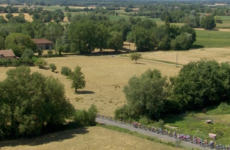
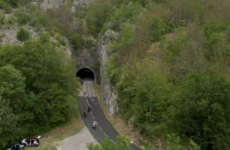
Tour de l’Ain is a UCI 2.1 classification stage race that unfolds across the diverse and challenging terrain of the Ain department in eastern France, where the roads wind through the Jura Mountains, the rolling hills of the Bugey region, and the flatter plains near the Saône River. The parcours is a blend of flat, fast stages and mountainous challenges, with key climbs featuring gradients of 6–10% on narrow, winding roads that test both climbing prowess and technical descending skills. The mountain stages often include long, sustained ascents with irregular gradients, where steep ramps and false flats alternate, while the descents are fast and technical, demanding precision and nerve from the riders.
The race dynamics vary depending on the stage profile. The flatter stages are typically contested in high-speed bunch sprints, though crosswinds on the exposed plains can split the peloton and create opportunities for late breaks. The mountainous stages, however, are where the race truly unfolds, with attacks launching on the steepest sections or during the technical descents, where gaps can open quickly. The peloton often fractures into smaller groups on the most demanding climbs, while the flatter stages allow for faster pacing and more controlled racing. The finish styles range from uphill sprints on steep, short climbs to reduced-group finishes after long descents or solo moves on the most challenging stages. The Tour de l’Ain is a race of contrasts, where the interplay of terrain, weather, and tactics creates a dynamic and unpredictable test for riders.
Markel Beloki gave EF Education-EasyPost their second victory in the Tour de l’Ain, clipping away from a ten-rider breakaway on the descent from the Col de Portes and then soloing to the stage win and race lead.
Beloki’s first professional victory came on a testing 161.9 kilometre stage from Saint-Vulbas to Lagnieu that included two ascents of the Col de Portes in the second half.
An early breakaway of four included Jason Tesson (TotalEnergies), Maximillien Juillard (Vélo Club Villefranche Beaujolais), Morné Van Niekerk (Vélo Club Villefranche Beaujolais), and Kenny Molly (Van Rysel-Roubaix).
Tesson was already dropped as they made their way up the the 14.6km long Col de Portes for the first time. With less than 30 seconds on the peloton, Thomas Gachignard (TotalEnergies) scrambled across to the remaining three.
On the descent, Van Niekerk pulled away with Gachignard, with Molly and Juillard in pursuit, but the next climb of the Col de Portes caused a massive shift in the race situation.
Gachignard was the last caught by a group of 10 riders, with Rémi Arsac (Decathlon CMA CGM), Jamie Meehan (Cofidis), Geoffrey Bouchard (TotalEnergies), Axel Mariault (CIC), Jefferson Cepeda and Markel Beloki (EF Education-EasyPost), Nicola Conci (XDS Astana), Huw Buck Jones (Bourg-en-Bresse Ain), Henrique Bravo and Jose Said Cisneros (Soudal-Quickstep Devo).
Bravo made a move near the summit, splitting the group with Beloki, Meehan and Mariault following him across the top with 25.4km to go. On the descent the leaders came back together to try to hold off the chasing peloton without Bouchard.
The Frenchman was joined in the pursuit by Noa Isidore (Decathlon CMA CGM) and Adam Howell (Bourg-en-Bresse Ain) but they were still trailing inside 10km to go when Beloki attacked just before the end of the descent and opened up a massive lead.
Results :


 ME - Stage 2 </strong> - Saint-Vulbas - Lagnieu : 161,9 km
<!--more-->
Tour de l’Ain is a UCI 2.1 classification stage race that unfolds across the diverse and challenging terrain of the Ain department in eastern France, where the roads wind through the Jura Mountains, the rolling hills of the Bugey region, and the flatter plains near the Saône River. The parcours is a blend of flat, fast stages and mountainous challenges, with key climbs featuring gradients of 6–10% on narrow, winding roads that test both climbing prowess and technical descending skills. The mountain stages often include long, sustained ascents with irregular gradients, where steep ramps and false flats alternate, while the descents are fast and technical, demanding precision and nerve from the riders.
The race dynamics vary depending on the stage profile. The flatter stages are typically contested in high-speed bunch sprints, though crosswinds on the exposed plains can split the peloton and create opportunities for late breaks. The mountainous stages, however, are where the race truly unfolds, with attacks launching on the steepest sections or during the technical descents, where gaps can open quickly. The peloton often fractures into smaller groups on the most demanding climbs, while the flatter stages allow for faster pacing and more controlled racing. The finish styles range from uphill sprints on steep, short climbs to reduced-group finishes after long descents or solo moves on the most challenging stages. The Tour de l’Ain is a race of contrasts, where the interplay of terrain, weather, and tactics creates a dynamic and unpredictable test for riders.
Markel Beloki gave EF Education-EasyPost their second victory in the Tour de l'Ain, clipping away from a ten-rider breakaway on the descent from the Col de Portes and then soloing to the stage win and race lead.
Beloki's first professional victory came on a testing 161.9 kilometre stage from Saint-Vulbas to Lagnieu that included two ascents of the Col de Portes in the second half.
An early breakaway of four included Jason Tesson (TotalEnergies), Maximillien Juillard (Vélo Club Villefranche Beaujolais), Morné Van Niekerk (Vélo Club Villefranche Beaujolais), and Kenny Molly (Van Rysel-Roubaix).
Tesson was already dropped as they made their way up the the 14.6km long Col de Portes for the first time. With less than 30 seconds on the peloton, Thomas Gachignard (TotalEnergies) scrambled across to the remaining three.
On the descent, Van Niekerk pulled away with Gachignard, with Molly and Juillard in pursuit, but the next climb of the Col de Portes caused a massive shift in the race situation.
Gachignard was the last caught by a group of 10 riders, with Rémi Arsac (Decathlon CMA CGM), Jamie Meehan (Cofidis), Geoffrey Bouchard (TotalEnergies), Axel Mariault (CIC), Jefferson Cepeda and Markel Beloki (EF Education-EasyPost), Nicola Conci (XDS Astana), Huw Buck Jones (Bourg-en-Bresse Ain), Henrique Bravo and Jose Said Cisneros (Soudal-Quickstep Devo).
Bravo made a move near the summit, splitting the group with Beloki, Meehan and Mariault following him across the top with 25.4km to go. On the descent the leaders came back together to try to hold off the chasing peloton without Bouchard.
The Frenchman was joined in the pursuit by Noa Isidore (Decathlon CMA CGM) and Adam Howell (Bourg-en-Bresse Ain) but they were still trailing inside 10km to go when Beloki attacked just before the end of the descent and opened up a massive lead.
<strong>Results : </strong>
<iframe width="100%" height="730" scrolling="yes" frameborder="0" data-lazy-priority="low" data-lazy-src="https://firstcycling.com/widget/?r=63&y=2026&s=2&lang=ENG&cn=1" src="https://firstcycling.com/widget/?r=63&y=2026&s=2&lang=ENG&cn=1"></iframe>)