Description
August 1, 2026
5th Tour de France Femmes avec Zwift 2026 🇫🇷 (2.WWT) WE – Stage 1 – Lausanne – Lausanne : 138 km
Tour de France Femmes avec Zwift is a UCI Women’s WorldTour classification stage race that traverses a diverse and demanding array of terrains across France,
Show more...
August 1, 2026
5th Tour de France Femmes avec Zwift 2026 🇫🇷 (2.WWT) WE – Stage 1 – Lausanne – Lausanne : 138 km
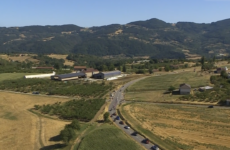
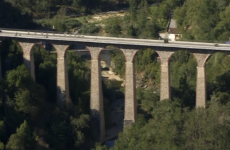
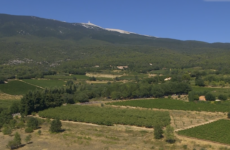
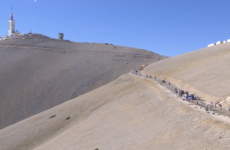
Tour de France Femmes avec Zwift is a UCI Women’s WorldTour classification stage race that traverses a diverse and demanding array of terrains across France, showcasing the country’s most iconic landscapes—from rolling vineyards and open plains to rugged mountain passes and technical descents. The parcours is designed to test every facet of a rider’s ability, with stages that range from flat, high-speed sprint finishes to grueling mountain ascents featuring gradients of 8–12% on narrow, winding roads. The climbs are often long and sustained, such as those in the Vosges, Alps, or Pyrenees, where the roads snake through dense forests and open pastures before culminating in punishing summit finishes. The descents are fast and technical, with sharp switchbacks and uneven surfaces that demand precision and courage. The race dynamics vary dramatically depending on the stage profile. The flatter stages are typically contested in high-speed bunch sprints, though crosswinds on exposed roads can split the peloton and create opportunities for late breaks. The hilly and mountainous stages, however, are where the race truly unfolds, with attacks launching on the steepest sections or during the technical descents, where gaps can open quickly. The peloton often fractures into smaller groups on the most demanding climbs, while the flatter stages allow for more controlled racing and tactical maneuvering. The finish styles range from uphill sprints on steep, short climbs to reduced-group finishes after long descents or solo moves on the most challenging stages. The Tour de France Femmes is a race of endurance, strategy, and versatility, where the interplay of terrain, weather, and tactics creates a dynamic and unpredictable test for the world’s best riders.
Lorena Wiebes (SD Worx-Protime) won stage 1 and secured the first yellow jersey of this Tour de France Femmes, proving her resilience by sprinting to victory atop the Côte Saint-François, which split the peloton. Several bike lengths back, Kim Le Court-Pienaar (AG Insurance-Soudal) took second place, followed by Demi Vollering (FDJ United-Suez) in third place.
A breakaway of four got a large gap early on the stage, and Océane Mahé (Ma Petite Entreprise) took enough mountain points to take the polka-dot jersey, dropping back after the Côte de Vuillens, where Nikola Nosková (Cofidis) went solo, just over 40km from the finish.
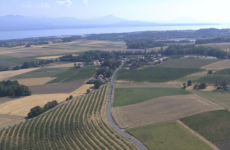
With the help of Amanda Spratt (Lidl-Trek), who bridged from the peloton, Idoia Eraso (Laboral Kutxa-Fundación Euskadi) and Maud Rijnbeek (VolkerWessels) came back to Nosková with 17km to go, but the peloton was less than a minute behind as the race went along the shore of Lake Geneva and reeled in the break with 6km to go.
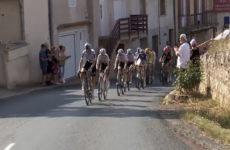
After a lead-out by her team, Le Court-Pienaar put in an acceleration on the steepest part of the finishing climb but could not get away from the peloton, still almost 30 riders strong. Célia Gery (FDJ United-Suez) then reduced the group to nine riders, but the pace went down on the last kilometre, allowing more riders to come back.
Vollering attacked with 750m to go, and only Le Court and Elisa Longo Borghini (UAE Team L’IMAD) could follow her acceleration. Cédrine Kerbaol (EF Education-Oatly) had to leave a gap, and Wiebes went around her to catch up to the front trio.
The speed fell again with 400m to go. Kerbaol came from behind to begin the lead-out for her teammate Noemi Rüegg, and at the 200m sign, Wiebes accelerated down the left side of the road, quickly opening a gap to the rest and holding on to win the stage.
“I almost cannot believe it. The team, SD Worx-Protime, they worked super hard today. Anna [van der Breggen] still came to the front with 1km to go, and then Demi attacked. I was like, ‘I need to follow’. It was a long sprint, but I’m super happy with this,” said Wiebes after the finish.
The punchers and GC contenders tried to drop Wiebes on the finishing climb but had no success.
With the first attack of Gery, I still felt good. I was like, ‘OK, it’s 1km to go, I need to hold on, I cannot drop anymore’. I was a bit blocked when EF [Education-Oatly] started on the right side, then I found my way. I started a bit early, but I was like, ‘I need to go now’,” Wiebes described the final kilometre.
“I’m really happy with the support from my team and the staff. That gave me extra energy. I mean, they fully believed in me, even I had some doubts. I’m super grateful for that,” finished Wiebes.
Breakaway caught in Lausanne
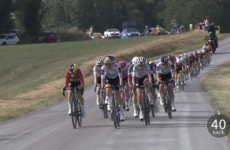
Starting and finishing in Lausanne, the stage covered 138km with three third-category climbs on the way and a 2.6km climb to the finish. After climbing out of Lausanne, the real start was given, and the attacks started right away. 9km into the stage, Rijnbeek, Eraso, Nosková, and Mahé joined forces to form the break of the day.
Alison Jackson (St Michel-Preference Home-Auber93), Kiara Lylyk (Mayenne-Monbana-MyPie), and Romina Hinojosa (Lotto-Intermarché) went on the chase, though the Mexican never made it to the two Canadians and soon was back in the bunch. The peloton took it easy and let the gap go out to over four minutes, and on the way along Lake Neuchâtel, Jackson left Lylyk behind in an attempt to bridge to the front group on her own.
Nosková set the pace early on the Côte de Chables but could not follow when Mahé accelerated on the last 500 metres of the climb, and Mahé took the maximum points at the top. Jackson crested the climb 1:20 minutes later; she never made it to the front and, like Lylyk, was instead absorbed by the peloton, six minutes behind the break.
A crash in the peloton with 80km to go, one of several on the stage, took down three riders each of Picnic PostNL and Fenix-Premier Tech, and Laura Tomasi (Uno-X Mobility) had to undergo a concussion protocol. She continued at first but later abandoned the race.
The break rolled through the intermediate sprint while Charlotte Kool (Fenix-Premier Tech) was the only one to sprint for the remaining points in the peloton, underlining her green jersey ambitions.
Mahé took maximum points again on the Côte de Villars-le-Comte where the peloton finally upped the pace. Riejanne Markus (Lidl-Trek), Rosa Klöser (Canyon-SRAM), and Femke de Vries (Visma-Lease a Bike) briefly went away while Isabella Holmgren (Lidl-Trek) crashed near the front of the peloton and Vollering increased the pace, with gaps opening behind a group of 12.
Things came back together on the descent where Spratt attacked, with Émilie Morier (St Michel-Preference Home-Auber93) unable to follow the Australian’s daring downhill speed. The breakaway then split on the Côte de Vuillens as Nosková went solo and Mahé dropped back to the bunch while Spratt picked up first Rijnbeek, then Eraso in the chase.
The peloton had been 1:52 minutes behind Nosková at the top of the climb and continued to reduce the gap on the way south towards Lake Geneva. On the downhill to the lake, Arlenis Sierra (Movistar) overshot a corner, and her teammate, GC leader Marlen Reusser, somersaulted over her. Reusser was able to return to the peloton and did not lose any time in the end, finishing 10th on the stage.
Nosková was caught by the three chasers on the lakeside road, but the peloton had them in their sights and closed the gap on the outskirts of Lausanne, 6km from the finish. On the Côte Saint-François, Wiebes was always in the first couple of positions and could follow all moves before she unleashed her sprint on the finishing straight to win the stage and take the first yellow jersey.
Results :