Description
October 4, 2026
European Continental Championships 2026 🇸🇮 – Road Race (CC) ME – Ljubljana – Šenčur : 196,3 km
European Continental Championships – Road Race is a UCI-sanctioned championship road race contested by national teams,
Show more...
October 4, 2026
European Continental Championships 2026 🇸🇮 – Road Race (CC) ME – Ljubljana – Šenčur : 196,3 km
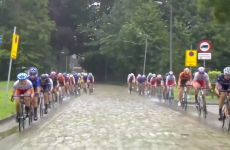
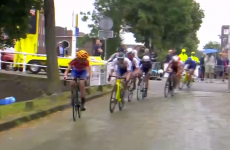
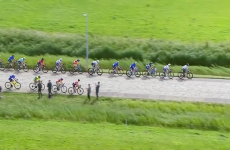
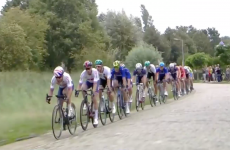
European Continental Championships – Road Race is a UCI-sanctioned championship road race contested by national teams, combining long paved sections, rolling terrain, short climbs and technical descents. The course typically covers more than 150 km, with repeated changes of gradient rather than one continuous mountain ascent. Climbs can range from gradual 4–6% rises to sharper ramps above 10%, creating frequent accelerations and testing riders’ ability to manage effort across a long distance. Narrow roads, tight corners and exposed sections make positioning important, particularly before climbs and technical passages, while wind and changing weather can influence the formation of groups. Racing often begins with controlled breakaway attempts before the pace increases as teams seek to place riders in advantageous positions. The peloton can stretch and fragment on successive climbs, with flatter sections allowing groups to regroup. As the finish approaches, attacks and counterattacks become increasingly frequent. The race can conclude with a solo move, a reduced-group sprint or a late acceleration, depending on the course profile and accumulated fatigue.
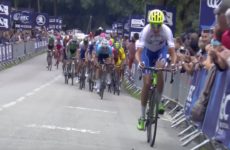
Pre-race favourite Remco Evenepoel delivered the goods, outsprinting Giulio Ciccone to claim the men’s road race title in a photo-finish at the European Championships in Slovenia on Sunday. The Italian was the only rider to be able to stay on Evenepoel’s wheel when he attacked with 32 kilometres to go.
The two stayed together for the fifth and final ascent of Možjanca, extending their advantage as they raced toward the finish. Inside the final 10 kilometres, Evenepoel shook his head in frustration after Ciccone refused to take a turn at the front.
Evenepoel led into the final corner at 300 metres, but Ciccone used the inside line to take the front, looking like he had the win in the bag. Evenepoel responded with a powerful acceleration, and the two threw their bikes toward the line, leaving the result too close to call. Both had to wait for confirmation before Evenepoel screamed in joy, while Ciccone was left bitterly disappointed.
After his Belgian teammates controlled the race and shut down every move, Evenepoel attacked twice, sliding out on a corner following his first move, and then four kilometres later, he attacked again and powered clear with Ciccone.
Behind, Italy’s Scaroni jumped from the chase group with 14 kilometres, and held on to take the bronze medal, crossing the line 59 seconds back.
“I have to thank my teammates a lot. The race they did was exactly how we wanted to do, and it was a bit of a tricky situation. Second last time on the climb, I think I put a nice attack but I went a bit too fast in the corner and I just slid away. I think there I could have could have gone, but in the end we stayed calm and we came back to the plan. And then I put an attack just before the descent. And then I was with Cicco in the front so we worked together pretty well,” Evenepoel said.
“I thought I was not gonna get it [the win] anymore, but then I saw him slowing down quite a lot, a hundred meters to go and I just came just over him on the finish line.”
With the victory, Evenepoel added the one championship jersey, at the elite level, that was missing in his palmares which includes the Belgian national and the rainbow World jersey.
“I’m super happy, super proud of this. This performance was honestly really tough week for me after the deception of the world. So I think it was playing more in my head than i’ve been showing. So it’s a big relief to be back on a good level today and to complete my Championship jerseys so it feels amazing.”
Remco repays a stifling ride from his Belgian team
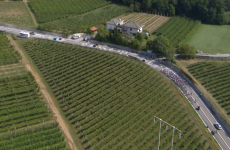
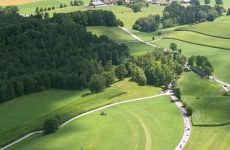
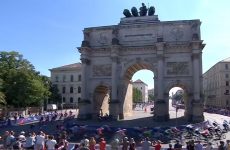
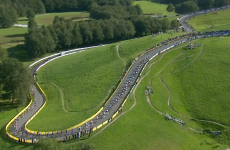
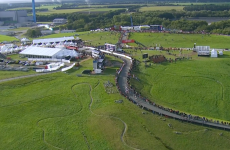
The course for the elite men’s race at the European Championships was similar to that for the women, with an 85km winding leg from the Slovenian capital Ljubljana, preceding the closing circuits around Šenčur. However, rather than taking on two of the 22km laps, the men had five to deal with, making for a 196.3km race with almost 2,500m of vertical ascent.
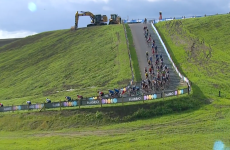
Almost all the climbing came on the circuit, the Championships’ signature climb to Možjanca providing a stiff test, climbing at an average gradient of 10.3% for its 2.1km.
A slightly drawn-out battle for the break lasted for the opening 15km before five riders got away, but with the Danish team particularly active at the front of the peloton, they were unable to gain a conclusive advantage.
With 50km done Jakob Söderqvist (Sweden), Josef Černý (Czechia), Tiago Antunes (Portugal), Fabian Weiss (Switzerland), Jochem Kerckhart (Netherlands) and the retiring home rider Luka Mezgec were still only 1:10 up the road.
Riding on the front of the bunch, the Belgian team only allowed the gap to grow once a two-man chase group was caught.
With just over 110km to go, the leaders crossed the finish line for the first time with the peloton still less than 1:20 behind, and other nations assisting Belgium in monitoring the front of the bunch.
As was expected, the pace lifted on the approach to the first ascent of the climb and when the leaders reached the bottom, the peloton was just 35 seconds behind. Only Kerckhaert, Antunes and Weiss survived the climb as the action began in the peloton, which was only 20 seconds back, though they led over the plateau and onto the narrow, recently resurfaced descent.
Persistence paid off for the leading trio, and their lead survived onto the second lap, the Belgian team leaving them hanging out to dry as they continued to lead the bunch, which had already lost almost half its 115 starters.
Oddly, the chaser-in-chief as the leaders approached the climb was Söderqvist, the Swede attacking the peloton which had caught him less than a lap before, though he was back in the bunch the moment the road ramped upward. With the Italians taking control and the Belgians melting into the peloton on the bottom of the climb, the three leaders were also caught.
Jan Christen launched the first attack from the reduced peloton, the Swiss rider being allowed to head over the top of the climb alone; though, with the Belgians back on the front, he was soon back in the fold.
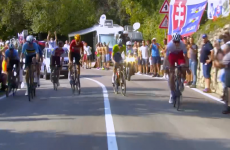
On the third lap, the Italians upped the pressure the next time up the climb, with 60 kilometres to go, but swung off, leaving Belgian’s Ramses Debruyne to set a hard pace with Remco Evenepoel on his wheel, as more riders, including Mads Pedersen shelled off the back, once again.
The high pace caused a split of around 22 riders at the front, with the chase group including Pedersen and Danish teammates facing a 35-second deficit to claw back, which they did after expending a ton of energy. Meanwhile, France’s Pavel Sivakov took a solo flyer on the descent, forcing Belgium to reel him in while his teammates could sit on in the peloton down to 42 riders.
The scenario repeated on the next ascent of the decisive climb, but this time Slovenia moved to the front. Matej Mohorič and then Jan Tratnik set a fierce tempo for Primož Roglič, who tucked in behind the Belgian team as they again drove the pace, shutting down every attack. With 36km to go, Belgium launched Remco Evenepoel, while Italy’s Giulio Ciccone accelerated at the same time.
But Evenepoel slid out after overcooking a corner, leaving Ciccone to continue solo. Evenepoel got up quickly and, with the help of his teammates, reeled back in the Italian, who slowed down, probably thinking it was too early to be solo.
About four kilometres later, Evenepoel attacked again, with Ciccone quickly joining him. The pair raced down the descent, with the Belgian driving the pace and doing most of the work to build a gap over a small chase group led by Roglič. As they crossed the line to begin the final lap, Tadej Pogačar waved to the crowd from the race director’s car.
With 20 kilometres to go, Evenepoel and Ciccone had 30 seconds to a disorganised chase group, with Evenepoel’s teammates disrupting the rhythm. France finally put riders at the front, but by then, the gap was 40 seconds and it was too little, too late.
The pair continued to push the pace, with Evenepoel doing most of the work, leading to the final sprint.
Results :