Description
June 17, 2026
89th Tour de Suisse 2026 🇨🇭 (2.UWT) ME – Stage 1 – Sondrio – Sondrio : 144 km
Tour de Suisse is a UCI WorldTour classification stage race that serves as a relentless showcase of the Swiss Alps’ most demanding and scenic terrain,
Show more...
June 17, 2026
89th Tour de Suisse 2026 🇨🇭 (2.UWT) ME – Stage 1 – Sondrio – Sondrio : 144 km
Tour de Suisse is a UCI WorldTour classification stage race that serves as a relentless showcase of the Swiss Alps’ most demanding and scenic terrain, blending high-altitude climbs, technical descents, and fast, rolling roads into a week-long test of endurance and versatility. The route traverses a mix of long, sustained mountain passes and shorter, explosive ascents, with gradients frequently reaching 8–12% on narrow, winding roads that cut through dense forests, alpine meadows, and rocky outcrops. The climbs are often irregular, featuring steep ramps, exposed sections, and technical switchbacks, while the descents are fast and treacherous, with sharp corners and uneven surfaces that demand precision and confidence. The race dynamics are shaped by the constant changes in elevation and the tactical opportunities they present, with attacks launching on the steepest sections or during the high-altitude stages, where the thin air amplifies the effort required. The peloton fractures early on the toughest climbs, thinning to a select group of climbers who contest the stage victory, while the flatter stages are rarely straightforward, often featuring crosswinds or punchy hills that disrupt the rhythm. The time trial stages, whether short and explosive or long and technical, add another layer of complexity, rewarding riders who can excel against the clock. The sprint finishes are fast and technical, contested on wide roads or slightly uphill drags that favor power and positioning. The Tour de Suisse is a race of contrasts—where the beauty of the Swiss landscapes belies the brutality of its parcours, demanding resilience, climbing prowess, and adaptability from start to finish.
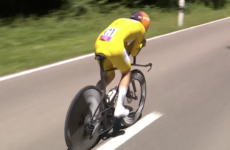
Tadej Pogačar (UAE Team Emirates-XRG) put on an outrageous long-range solo performance to win stage 1 of the Tour de Suisse, making an ominous statement ahead of the Tour de France as he rode the last 70km on his own with apparent ease.
The scariest part for his rivals should be the ease with which he formed his lead on the opener in Italy. With one breakaway rider left up the road, Pogačar showed signs of his intentions at the Tissot Kilometre bonus sprint, where he mopped up two seconds before continuing his surge and forming a small lead group.
From here, and onto an uncategorised section of climbing, Pogačar barely even had to attack as Brandon McNulty upped the pace for him. He moved away with minimal effort as he looked back at his faltering competitors, then caught and passed the last escapee, before setting off solo and never being seen again en route to victory.
This, the 118th win of the world champion’s career, continued his stunning win record in 2026, now with 10 victories from just 12 race days.
With just one stage of the five completed, Pogačar winning the general classification seems to be even more of a foregone conclusion than was already expected at the start, crossing the line 2:14 ahead of his closest competitor Richard Carapaz (EF Education-EasyPost).
Carapaz was impressive as he powered through the final 50km solo, too, with Sondrio local Andea Bagioli (Lidl-Trek) utilising his knowledge of the roads to take a strong third place on the day, almost catching the Ecuadorian in sight of the line.
With groups scattered all over the road following Pogačar’s quiet onslaught, the first group of riders to cross the line came home more than four minutes down, with the likes of Primož Roglič (Red Bull-Bora-Hansgrohe) 4:43 down on his compatriot at the line.
“I don’t know, this was definitely not the plan, but somehow it worked, thanks to the teammates, I think, because without them blocking in the back, setting the place before this wouldn’t be possible,” said Pogačar as he warmed down after the finish,
“It was hard, really hard. The start was easy, and everything was under control. The first climb of the day was already super hard just to go up, but Nils [Politt] and Tim [Wellens] did an amazing pace there. Then, after the bonus seconds, me and Brandon looked at each other and said, ‘Let’s go’.
“We tried something, and from then on, we just went. I didn’t have radio at that time, so I didn’t know what’s going on in the back, so I just kept riding hard. Once I knew the gap is quite big, I could set into the rhythm and try to hold it to the finish, which was super long and really hard, but was also at the same time quite technical, so it was really nice to be alone.”
Pogačar will try to defend and extend his lead throughout the remaining four stages, with the flat, 24km time trial on Saturday, and queen stage to Villar-sur-Ollon on Sunday set to provide more GC action.
“[Tomorrow’s goal is] stay safe and keep the jersey. We have a strong team; we can try to go for the stage with Johnny [Narváez], Brandon [McNulty], or Felix [Großschartner], or anybody else in the team, we’ll see how the guys feel.”
How it unfolded
As the first edition of a short men’s Tour de Suisse kicked off for the opener of five stages in Sondrio, only two willing riders went up the road to form the day’s breakaway, Cedric Beullens (Lotto-Intermarché) and Frederik Dversnes (Uno-X-Mobility).
They were able to build a significant gap of close to four minutes over the first 60 flat kilometres, but much of this was brought back over the Buglio in Monte climb, and soon Beullens had dropped back to the peloton, leaving only the Norwegian Giro stage winner in front.
UAE had begun working on the Buglio in Monte climb, with Nils Politt and Tim Wellens upping the pace as a sign of things to come.
Action in the peloton started to really heat up ahead of the Tissot sprint in Pedemonte, where Tadej Pogačar (UAE Team Emirates-XRG) made his intentions clear by mopping up the two maximum bonus seconds still on offer behind Dversnes, who was only a minute ahead at this point.
A small group broke away from the pack as racing was being shattered with 72km to go on an uncategorised section of climbing. Pogačar was present, putting Brandon McNulty to work at the front before he set off on his own with 71.5km to go.
Quickly, he caught Dversnes, then left him behind with 69.2km remaining and a massive solo effort staring him in the face. Pogačar didn’t look worried for a moment, though, dancing on the pedals as he extended his gap over the Triangia climb (4.3km at 7.3%).
While Pogačar continued to excel on both the uphill and downhill roads, the group of around 10 riders chasing him swelled to almost 20 riders, many of them the top GC names, until Richard Carapaz (EF Education-EasyPost) set off on a solo pursuit with 50km to go.
The former Olympic champion worked well to extend a one-minute lead over the main chasing group, but Pogačar was working away at his solo onslaught out in front, entering the last 40km with a massive gap of just under two minutes.
Never looking like he was anywhere near his threshold during the solo effort, Pogačar was able to fiddle with his radio to reconnect it, scratch his back, and take every descent with ease as he extended his massive lead.
Those in the chasing group failed to make any impression on the two leaders on the road, except for Andrea Bagiolo (Lidl-Trek), a local from the area, who attacked away with 23km to go just before the final climb.
He stormed into the large gap held by Carapaz, and, at times, looked like he was going to make the catch, but ended up finishing the day just 15 seconds after him. More than two minutes up the road ahead of both of them, though, was Pogačar, who had more than enough time to celebrate victory at the finish.
Results :