Description
July 7, 2026
Vuelta a Madrid 2026 🇪🇸 MU23 – Stage 1 – Móstoles – Móstoles : 109,4 km
Vuelta a Madrid is a stage race that unfolds across the rugged and varied terrain of the Community of Madrid,
Show more...
July 7, 2026
Vuelta a Madrid 2026 🇪🇸 MU23 – Stage 1 – Móstoles – Móstoles : 109,4 km
Vuelta a Madrid is a stage race that unfolds across the rugged and varied terrain of the Community of Madrid, where the roads climb relentlessly through the Sierra de Guadarrama, descend into rolling foothills, and traverse the arid plains surrounding the Spanish capital. The parcours is a mix of short, explosive climbs and long, sustained ascents, with gradients frequently reaching 8–12% on narrow, winding roads that cut through pine forests, rocky outcrops, and open scrubland. The climbs are often irregular, featuring steep ramps, technical switchbacks, and exposed sections where the wind can play a decisive role, while the descents are fast and sinuous, with tight corners and uneven surfaces that demand precision and control.
The race dynamics are defined by the relentless elevation changes and the tactical battles they provoke, with attacks launching on the steepest sections or during the high-altitude stages, where the peloton fractures into smaller groups of climbers. The flatter stages are rarely straightforward, often disrupted by punchy hills or crosswinds that create echelons and split the field into fragments. The finish styles vary—some stages conclude in a reduced bunch sprint on a slightly uphill drag, while others favor a solo move or a small group of riders battling it out on a final climb or a fast descent into a historic town or village. The Vuelta a Madrid is a race of contrasts, where the dramatic landscapes of central Spain provide a stunning backdrop to the fierce competition on the road, demanding both physical prowess and tactical intelligence from start to finish.
Mika Vijfvinkel is the first leader of the Vuelta a Madrid Under-23 in Móstoles. The Froiz team cyclist was the fastest in the sprint finish, after a day in which he had already been a protagonist and where he has accumulated 14 bonus seconds.
The ribbon-cutting ceremony that officially launched the competition was attended by the mayor of Móstoles, Manuel Bautista; the councilor for sports, Ángel Álvarez; and the president of the Madrid Cycling Federation, Diego Sánchez. After a neutralized section through the streets of Móstoles, the 110-kilometer circuit through Quijorna and Valdemorillo began, where the intermediate sprint and mountain points were located, respectively.
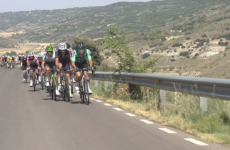
The stage saw numerous breakaway attempts, but none of the splits managed to create a significant gap. Riders like Nil Aguilera (Caja Rural ALEA) and the Spanish champion himself, Manuel Sanroma (Cortizo), who was debuting the jersey he won just 10 days ago, were the main protagonists.
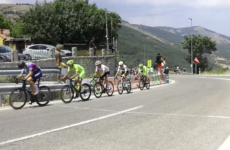
With bonus seconds at those intermediate sprints, Mika Vijfvinkel (Froiz) and Luis Alberto Lajarín (Finisher) also made their moves. But all these attacks left the peloton together for the sprint finish in Móstoles. A very fast finish that Smartlog Nest tried to organize, but in the end it was Vijfvinkel himself who raised his arms in victory ahead of Hemeryck (Dovy Keukens) and Joan Cadena (Technosylva Rower Bembibre).
The awards ceremony to recognize the first leaders of the race was attended by the Móstoles sports councilor, Ángel Álvarez, and the president of the Madrid Cycling Federation (FMC). Mika Vijfvinkel (Froiz) was awarded the red jersey for overall leader, sponsored by the Community of Madrid; Vijfvinkel (Froiz) also received the blue ULEVEL jersey; Pablo Ortega (Cortizo) won the white jersey for best Madrid rider, sponsored by X-Sauce; Vanslembrouck (Dovy Keukens) took the King of the Mountains jersey, sponsored by Shimano; Vijfvinkel (Froiz) will wear the green jersey for intermediate sprints, sponsored by the Alcobendas City Council; and Hemeryck (Dovy Keukens) won the orange jersey for best young rider, sponsored by Kobe Motor.
Results :


 and the Spanish champion himself, Manuel Sanroma (Cortizo), who was debuting the jersey he won just 10 days ago, were the main protagonists.
With bonus seconds at those intermediate sprints, Mika Vijfvinkel (Froiz) and Luis Alberto Lajarín (Finisher) also made their moves. But all these attacks left the peloton together for the sprint finish in Móstoles. A very fast finish that Smartlog Nest tried to organize, but in the end it was Vijfvinkel himself who raised his arms in victory ahead of Hemeryck (Dovy Keukens) and Joan Cadena (Technosylva Rower Bembibre).
The awards ceremony to recognize the first leaders of the race was attended by the Móstoles sports councilor, Ángel Álvarez, and the president of the Madrid Cycling Federation (FMC). Mika Vijfvinkel (Froiz) was awarded the red jersey for overall leader, sponsored by the Community of Madrid; Vijfvinkel (Froiz) also received the blue ULEVEL jersey; Pablo Ortega (Cortizo) won the white jersey for best Madrid rider, sponsored by X-Sauce; Vanslembrouck (Dovy Keukens) took the King of the Mountains jersey, sponsored by Shimano; Vijfvinkel (Froiz) will wear the green jersey for intermediate sprints, sponsored by the Alcobendas City Council; and Hemeryck (Dovy Keukens) won the orange jersey for best young rider, sponsored by Kobe Motor.
<strong>Results : </strong>
<iframe width="100%" height="730" scrolling="yes" frameborder="0" data-lazy-priority="low" data-lazy-src="https://firstcycling.com/widget/?r=388&y=2026&s=1&lang=ENG&cn=1" src="https://firstcycling.com/widget/?r=388&y=2026&s=1&lang=ENG&cn=1"></iframe>)